

How do you write a professional payment reminder without sounding harsh?
First, let’s take a look at an example to help you better visualize this. There’s a massive difference between these two messages:
Version 1: “Your payment failed. Please update your card immediately.”
Version 2: “Hey! Your card didn’t go through – no worries, happens all the time. Update it here and you’re all set.”
Same information. Completely different tone.
One sounds like you’re annoyed with them. The other sounds like you’re helping them solve a routine problem.
And that difference? That’s what determines whether they update their card or start looking for a new gym. This is pretty important for anyone learning how to deal with payment disputes effectively.

Why Your Billing Messages Sound Accusatory
Most failed payment messages sound harsh because they’re written from a place of frustration.
You’re thinking:
- “This is the third time this month!”
- “Why can’t people just keep their cards updated?”
- “Now I have to chase them down again!”
And that energy bleeds into your message – even if you don’t realize it.
Did you know? The best membership management software includes tone-neutral templates to prevent this.
What are the rules for writing non-accusatory billing messages?
Rule #1: Normalize the situation
Don’t make it sound like they’re the only person this has ever happened to.
❌ “Your payment was declined.”
✅ “Your card didn’t go through – happens to everyone.”
Rule #2: Focus on the solution, not the problem
Get them moving forward instead of dwelling on what went wrong. This is fundamental to how to collect past due invoices successfully.
❌ “Your payment failed and your account is past due.”
✅ “Update your card here and you’re all set.”
Rule #3: Avoid blame language
Words like “failed,” “declined,” “delinquent,” and “overdue” carry judgment. Swap them for neutral terms in your professional payment reminder email.
❌ “Your account is delinquent.”
✅ “Your payment didn’t process.”
Copy-Paste Templates You Can Use Right Now
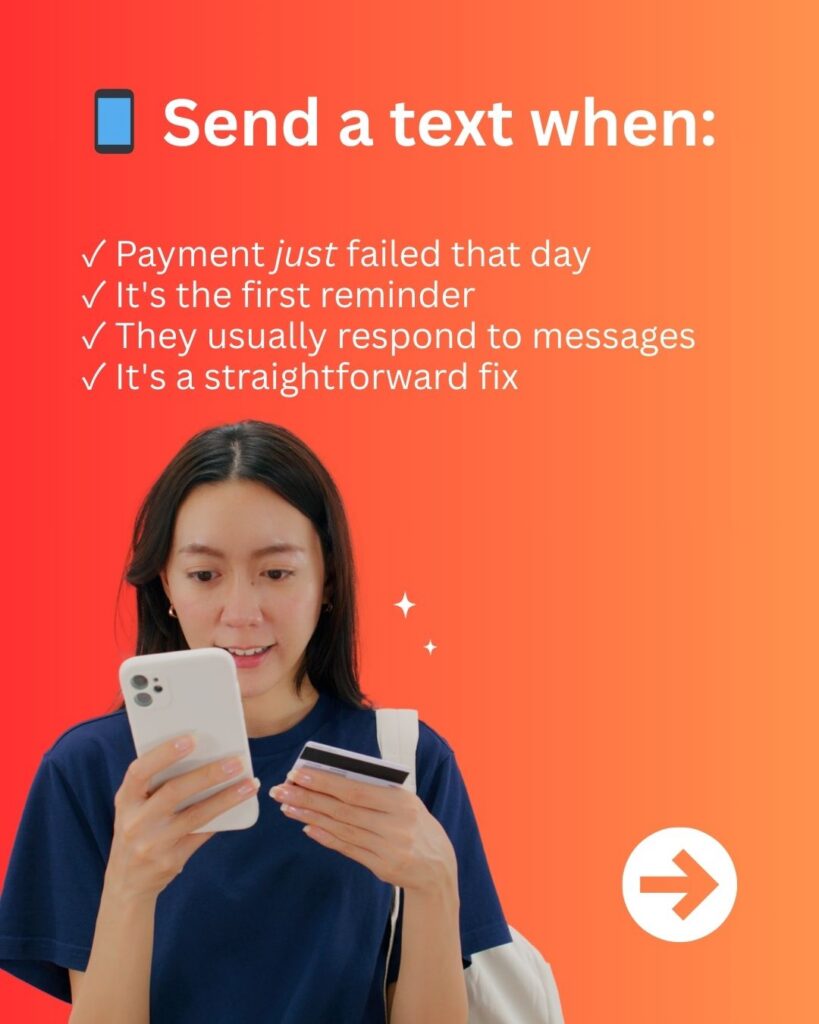
Template #1: First Failed Payment
Subject: Quick heads up – card didn’t go through
Hi [Name],
Your card didn’t process today. No worries, happens all the time – cards expire, banks flag things, etc.
Update it here: [link]
Do it by [Date] to avoid any interruption.
Let me know if you need help!
[Your name]
Template #2: Second Reminder (After 3-5 Days)
Subject: Friendly reminder – card update needed
Hey [Name],
Just a quick follow-up – your card still needs to be updated.
Here’s the link again: [link]
If you’re running into any issues, just reply to this and I’ll help you sort it out.
[Your name]
Template #3: Final Notice (Before Suspension)
Subject: Action needed by [date] to keep your membership active
Hi [Name],
Your card hasn’t been updated yet, and we’ll need to pause your membership on [date] if we don’t receive payment.
I don’t want that to happen! Update your card here: [link]
If something’s going on and you need to talk through options, give me a call at [number]. Happy to help.
[Your name]
These templates demonstrate effective membership billing practices and help you understand how to collect past due invoices without damaging relationships.
What These Templates Have in Common
- They’re direct without being harsh: No beating around the bush, but no attitude either.
- They assume the best: They don’t imply the person is trying to avoid payment. They treat it as a simple oversight.
- They offer help: “Let me know if you need help” shifts the dynamic from confrontation to collaboration – a key element in how to deal with payment disputes.
- They’re specific: Clear deadlines and clear actions remove confusion.
The Phrase That Changes Everything
Want one phrase that instantly softens any professional payment reminder email?
“No worries, happens all the time.”
Seriously. Add it to any failed payment message and watch how it changes the tone:
“Your card didn’t go through – no worries, happens all the time.”
“Bank flagged the transaction – no worries, happens all the time.”
“Card expired – no worries, happens all the time.”
It normalizes the situation and removes any shame or embarrassment the member might feel.
When to Call Instead of Message
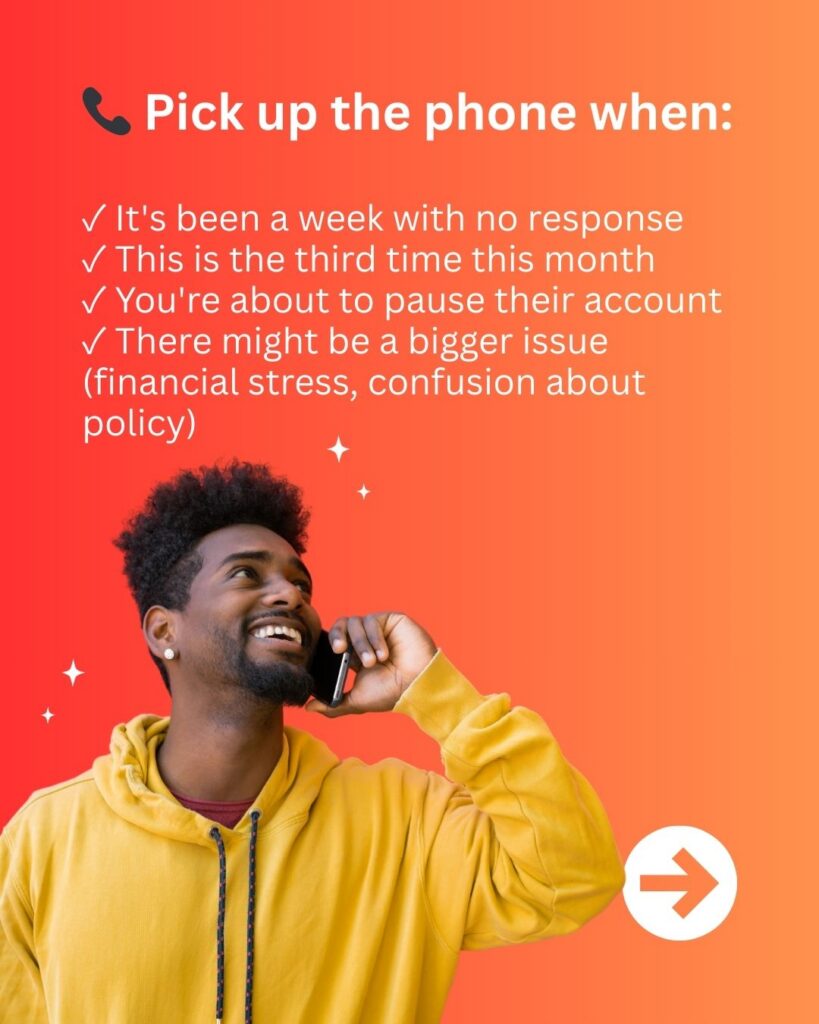
Some situations need a phone call, not a message:
- It’s been a week with no response
- This is the third failed payment in two months
- You’re about to suspend their account
- You suspect there might be a bigger issue (financial hardship, dissatisfaction with service)
But even on the phone, the same principles apply: be direct, be helpful, assume the best. This is part of comprehensive member retention strategies.
The Bottom Line
Your members aren’t trying to avoid paying you. Their card expired. The bank flagged it. They got a new card number.
Treat it like the routine administrative task it is, and your professional payment reminder email will feel helpful instead of accusatory.
The best membership management software includes these types of templates built-in, making it easier to maintain professional, consistent communication.
Quick Reference: Professional Payment Reminder Emails
Question: How do you write a professional payment reminder email without sounding harsh?
Answer: Write professional payment reminder emails by normalizing the situation, focusing on solutions rather than problems, and avoiding blame language. Use phrases like “happens all the time,” provide clear next steps, and offer help. This approach is essential for how to deal with payment disputes and how to collect past due invoices effectively.
Key Takeaways:
- Normalize failed payments with phrases like “happens all the time”
- Focus on solutions, not problems in your professional payment reminder email
- Avoid accusatory words like “failed,” “declined,” “delinquent”
- Provide clear deadlines and one-click solutions
- Use membership management software with built-in neutral templates to speed up the process
- Know when to call instead of email for complex situations
Keep Members Longer. Grow Revenue Faster.
Smart tools that cut admin time and stop preventable churn.
Frequently Asked Questions
Q: What words should I avoid in professional payment reminder emails?
A: Avoid blame words like “failed,” “declined,” “delinquent,” and “overdue.” Instead use neutral terms like “didn’t go through” or “didn’t process.”
Q: How many payment reminders should I send before calling?
A: Send 2-3 written reminders over 7-10 days, then call. If there’s no response to your professional payment reminder email, a phone call shows you care and allows for real conversation about any issues.
Q: What’s the best subject line for a payment reminder email?
A: Use clear, non-threatening subject lines like “Quick heads up – card didn’t go through” or “Card update needed.” Avoid alarming language like “URGENT” or “PAYMENT FAILED.”
Q: Should payment reminder emails include deadlines?
A: Yes. Always include a specific deadline in your professional payment reminder email: “Update by Friday to avoid interruption.” This creates clarity and urgency without being pushy.
Q: How do I deal with payment disputes without damaging relationships?
A: Listen first, stay calm, explain your policy clearly, and focus on solutions. Good membership management software tracks all communication, which helps when learning how to deal with payment disputes professionally.
Q: What if a member’s card fails repeatedly?
A: After the third failure in a short period, call them. There may be a larger issue. Offer to help troubleshoot or discuss alternative payment methods. This is key to how to collect past due invoices while maintaining relationships.